How to Size Liquor Store Refrigeration Systems for Peak Inventory
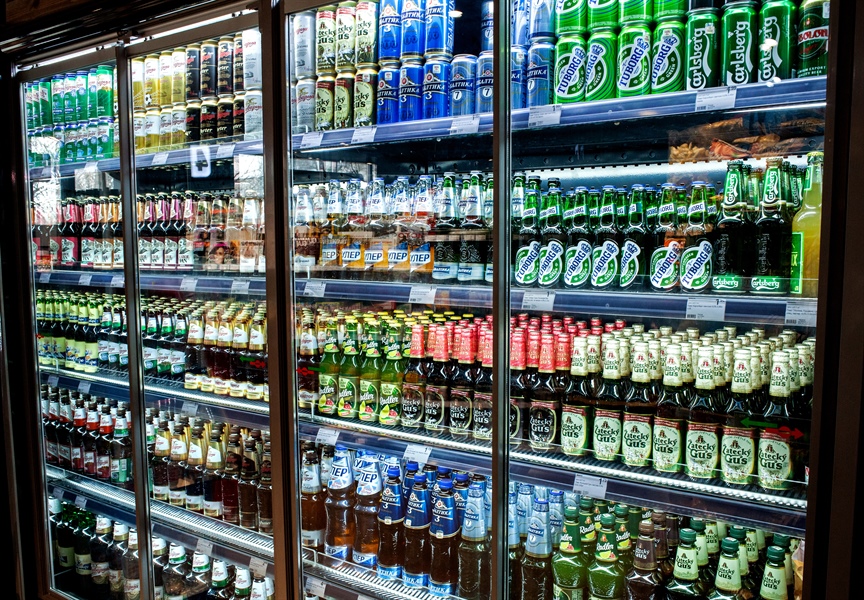
Managing a liquor store involves more than just stocking shelves—it requires maintaining product quality through proper refrigeration. Selecting and sizing refrigeration systems isn’t a one-size-fits-all process.
From beer to chilled wines and pre-mixed cocktails, each product has unique temperature requirements and handling demands. The footprint of the system, inventory rotation, and long-term storage strategy all impact the performance and reliability of your refrigeration solution.
Failing to match refrigeration capacity to your inventory can lead to product spoilage, energy inefficiency, and compliance issues, especially during high-demand periods.
Solid Refrigeration understands the nuances of liquor stores and the complex refrigeration needs they bring. This article will guide you through advanced best practices for determining the correct system size.
We'll walk through how much cooler space each SKU typically needs, why storage and display functions should be separated, how to plan for inventory spikes, why product types affect walk-in configurations, and whether modular solutions allow you to grow over time.
Each section addresses a specific, technical concern for owners and managers tasked with making strategic refrigeration decisions. If you manage inventory in a high-turnover retail environment, this is the insight you’ve been looking for.
How Much Cooler Space Is Standard Per SKU in Liquor Store Refrigeration?
When determining how much cooler space to allocate per SKU, industry benchmarks suggest allocating 0.5 to 1.0 cubic feet per SKU for liquor stores with high product diversity and fast turnover. This estimate considers product dimensions, case quantities, and restocking frequency.
For high-volume items like beer and soda, bulk stacking or secondary storage outside the cooler may be necessary, while premium wines or spirits typically require shelving for upright display. Proper SKU allocation also supports airflow, which is critical for temperature consistency and refrigeration system efficiency.
Space per SKU also depends on how inventory is arranged. Double-deep stacking or the use of gravity-feed shelving systems can reduce the total linear feet needed, but can increase complexity in restocking.
SKU density should balance visual accessibility and storage capacity, ensuring staff can rotate inventory without disrupting temperature zones. Most liquor stores use upright coolers or reach-ins for fast-selling SKUs, while lower-turnover items may reside in walk-ins with ambient-temperature storage before transfer to display cases.
Regulatory guidelines for alcohol storage may further impact space needs. Beer must often be stored at lower temperatures than wine or spirits, requiring dedicated cooling zones or separate equipment. Proper SKU-level planning ensures a consistent customer experience and inventory integrity, particularly for refrigerated products in liquor stores.
Balancing Storage & Display Requirements in Refrigeration Sizing
Display units and storage units serve different operational goals. Display refrigeration is customer-facing, requiring easy product access, strong lighting, and visually appealing layouts.
These units must maintain consistent temperatures even during frequent door openings. In contrast, storage refrigeration is designed for back-end logistics, supporting bulk holding, product rotation, and reduced access frequency.
When sizing refrigeration systems, it’s important to separate these two functions to ensure system efficiency and inventory flow.
Liquor stores often benefit from a hybrid approach. A walk-in cooler with integrated display doors allows for stocking from the rear and selling from the front. Alternatively, using a centralized walk-in for storage, supported by several reach-in display coolers, creates redundancy and flexibility.
Display space should prioritize high-velocity SKUs and promotional items, while storage should accommodate multiple case sizes and extended shelf life needs. Overestimating display space can lead to energy waste, while under-sizing storage leads to stockouts or spoilage.
System zoning and load calculation tools provided by refrigeration specialists allow you to balance display and storage demand. Factoring in product type, access frequency, and ambient heat loads can help you properly size both components.
When reviewing system requirements for these functions, reference available refrigeration units with flexible configurations to handle diverse temperature and access needs.
Capacity Planning for Peak Sales Periods in Liquor Store Operations
Peak sales seasons—such as holidays, sports events, or weekends—place substantial demands on refrigeration systems. Capacity planning must account for not just the maximum number of SKUs, but also case volume, restocking frequency, and customer access cycles.
Overloaded coolers struggle to maintain temperature integrity, resulting in product degradation and system stress. Calculating average inventory load plus a 20–30% buffer for peak periods is a widely accepted practice for liquor retailers handling high turnover.
Sales data and purchasing cycles help inform this buffer. For instance, if a store typically stocks 200 cases weekly but increases to 300 during November and December, refrigeration must support that uplift without exceeding compressor duty cycles or causing thermal lag.
Installing dual-stage compressors or variable-speed systems can accommodate these fluctuations more effectively. In addition, staggered restocking schedules and the use of auxiliary cold storage during high-demand periods can relieve pressure on permanent infrastructure.
Because refrigeration performance degrades with overloaded airflow zones, managing spatial configuration is just as critical as cubic volume. Even during peak demand, airflow should remain unobstructed around condenser coils and fan-driven circulation zones to preserve system balance.
While planning for surge volume, inventory managers should evaluate how a cooler layout and replenishment routines can support consistent operation without system overload.
How Walk-In Cooler Sizing Varies by Beverage Product Type
Sizing a walk-in cooler for a liquor store requires a nuanced approach that accounts for the thermal properties, packaging, and turnover rates of different beverage types.
Beer and carbonated drinks typically require storage temperatures around 34–38°F, while wines often need a slightly warmer range of 45–60°F, depending on the varietal. Spirits generally do not require refrigeration, but may still be stored in cool zones for customer experience purposes. These varied requirements necessitate zoning within walk-in spaces or separate coolers entirely.
Product size and shape also affect layout and cooling performance. Bottled wine cases are typically taller and heavier than beer cases, requiring shelving support and larger turning radii.
Craft beer may be packaged in cans or specialty bottles, often sold in mixed packs, requiring more flexible racking. Kegged products for bar and taproom sales require floor-mounted coolers with reinforced flooring and draft system integration. Each of these product categories introduces specific spatial and temperature control needs that influence walk-in sizing decisions.
Additionally, humidity control, loading routines, and air exchange rates vary by product type. Wines are sensitive to vibration and need stable environments, while beer can tolerate more fluctuations. Sizing must factor these parameters alongside accessibility and stocking frequency. A walk-in designed without consideration for these distinctions can lead to uneven cooling, spoilage, or compliance violations.
Modular Refrigeration Systems: A Scalable Option for Growing Liquor Stores
Modular refrigeration systems offer scalable infrastructure for liquor stores with evolving inventory needs. These systems allow for expansion by connecting additional units as needed, either through additional display cases or by extending walk-in compartments.
For stores with limited square footage or uncertain demand forecasts, modular systems offer a cost-effective path to capacity growth without major reinvestment or construction disruption.
The key advantage of modularity lies in its flexibility. Expansion modules can include self-contained units, remote condensing units, or additional zones within a walk-in system. This flexibility makes it possible to accommodate new product lines or increasing case volumes over time.
For example, a store might begin with dedicated wine and beer sections, then later add a cider section or tap wall. With modular systems, cooling infrastructure grows with the business rather than requiring early overinvestment.
Energy efficiency is another benefit of modular systems. Units can be shut down independently during off-peak periods or controlled using energy management systems. This adaptability is particularly valuable in locations where space and electricity costs are at a premium.
For liquor store operators aiming to future-proof their operations, scaling refrigeration through modular solutions aligns with both operational goals and sustainability practices.
Plan Smarter Refrigeration Systems with Help from Solid Refrigeration
Designing the right refrigeration system for a liquor store involves careful planning across product type, peak sales cycles, SKU diversity, and long-term scalability. Solid Refrigeration brings decades of experience helping liquor retailers across Bloomington and the surrounding areas implement refrigeration systems built for real-world operations.
Whether you're starting with a compact reach-in system or planning a multi-zone walk-in with product-specific temperature controls, our solutions are engineered for performance and built to grow with your business. We offer complete assessments, technical support, and tailored recommendations for systems that align with your retail goals.
Reach out to Solid Refrigeration at 952-854-2850 to learn how we can help build the right refrigeration solution for your liquor store. If you're ready to get started, request your free estimate today and take the next step toward a smarter, scalable refrigeration system.