How Custom Walk-In Freezers Can Be Tailored to Your Operation
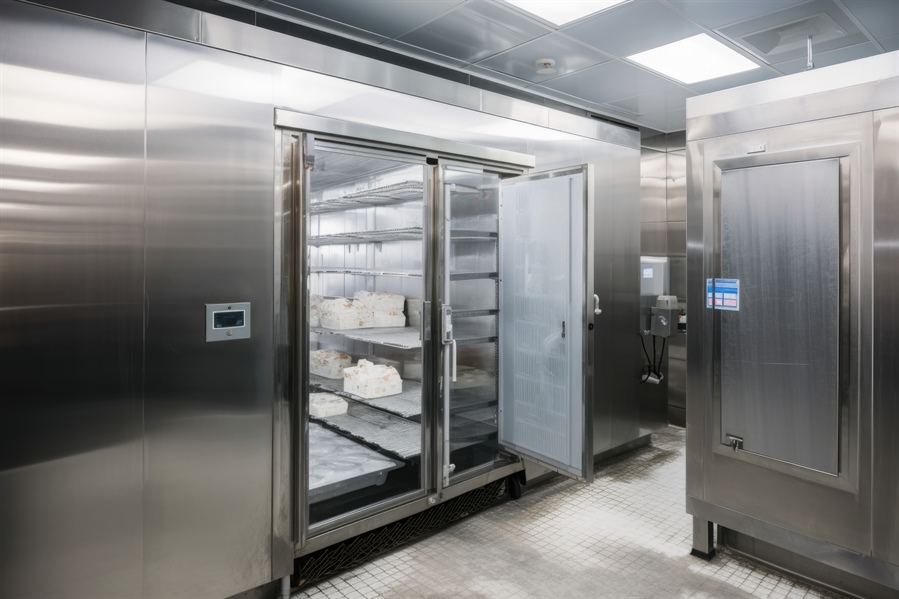
Custom walk-in coolers and freezers are a critical component for any business that relies on temperature-controlled storage. Whether you're managing a high-volume foodservice kitchen, a pharmaceutical warehouse, or a grocery chain, one-size-fits-all solutions often fall short.
That’s why tailored refrigeration is no longer optional—it's a strategic necessity. Every operation has unique storage needs, product handling procedures, and spatial constraints. Working with configurable systems lets businesses improve workflow, maximize storage efficiency, and meet stringent regulatory standards without compromising on usability or performance.
Imagine walking into a cooler where every panel, light, shelf, and entry point serves a specific purpose tied to your workflow. No wasted space, no energy drain, no retrofitting headaches.
These are not just cold boxes—they're precision tools designed for your business operations. Solid Refrigeration understands the demands of custom refrigeration environments and supports businesses in Minneapolis and beyond with expertly configured systems built for long-term performance.
In this article, we’ll explore how tailored walk-in refrigeration units meet business-specific requirements. Each section is built around a core question that helps business owners make informed, practical decisions about refrigeration system customization.
Exploring Custom Panel Configurations for Walk-In Coolers & Freezers
Custom panel configurations form the structural backbone of any walk-in cooler or freezer. These panels dictate not just the unit’s dimensions, but also its ability to fit within unconventional layouts or spatial constraints.
Most modern systems use modular panels with cam-locking mechanisms, allowing flexibility in size, thickness, and layout. Panel thickness, often ranging from 2 to 6 inches, directly influences insulation performance and energy efficiency.
High-traffic commercial settings may require thicker panels to maintain consistent internal temperatures, especially if the external environment varies significantly. Solid Refrigeration’s systems are built with high-density insulation foamed-in-place between durable metal skins, allowing tailored configurations without sacrificing structural integrity.
Panel customization also extends to corner placements, partition walls, and integration with existing architecture. Whether the cooler needs to fit into a confined utility space or adjoin existing refrigeration systems, custom panels can be designed to accommodate precise dimensional requirements.
Manufacturers typically offer pre-engineered configurations for ease of installation, but Solid Refrigeration provides full customization options for businesses that require bespoke layouts due to operational or compliance reasons. These tailored layouts help streamline installation and prevent costly retrofitting after the fact.
Advanced paneling also includes provisions for mechanical and electrical routing. Integrated electrical chases and pre-cut conduit paths reduce the need for on-site modification, which can save time and labor.
Panels can also include vapor barriers and antimicrobial coatings to support food safety protocols. Businesses seeking a high-performance walk-in freezer benefit from pre-engineered yet highly configurable systems that maintain thermal performance while meeting unique layout constraints.
Customizing Lighting, Shelving, & Floor Materials in Refrigeration Units
Lighting, shelving, and flooring are not just aesthetic choices in walk-in refrigeration—they directly impact usability, sanitation, and operational efficiency.
LED lighting systems are now the industry standard due to their low heat output and energy efficiency. Many systems offer motion-sensor lighting to reduce energy consumption while providing ample illumination during access.
Lighting customization also includes placement, brightness levels, and fixture type (recessed, surface-mounted, or vapor-tight). These features allow businesses to maintain visibility while reducing the strain on the cooling system.
Shelving options are just as varied. Custom shelving can be configured to suit product types, inventory rotation schedules, and accessibility needs. Common materials include epoxy-coated wire for corrosion resistance, stainless steel for durability and sanitation, and polymer shelving for lightweight versatility.
Adjustable and modular shelves allow operations to reconfigure storage layouts as inventory demands change. Solid Refrigeration offers a range of adjustable systems that accommodate both heavy and lightweight inventory loads across foodservice, healthcare, and industrial sectors.
Flooring material is another highly customizable element. Depending on the application, options include reinforced aluminum tread plate, fiberglass reinforced panels, or even insulated floors with anti-slip coatings.
Facilities handling heavy equipment may require structural flooring rated for pallet jacks or carts. Floor design can also support sanitary requirements, including coved bases for easy cleaning and thermal breaks to reduce energy transfer. These modular components integrate seamlessly with their custom refrigeration units, allowing for safe, efficient, and adaptable storage environments.
Design Practices That Optimize Interior Space in Walk-In Coolers
Efficient interior design starts with defining operational flow. Interior layouts should align with daily procedures—how staff stock, retrieve, and rotate inventory. Shelving should be positioned to maintain accessibility without obstructing airflow.
Narrow aisles and overstocked zones not only hinder workflow but disrupt the thermal envelope, leading to temperature inconsistencies. Organizing inventory by access frequency (e.g., high-turn items near the door, low-turn items deeper inside) minimizes open-door times and energy loss.
Using vertical space is one of the most effective ways to optimize interior storage. Adjustable shelving, cantilever systems, and ceiling-suspended racks allow businesses to stack goods safely without blocking airflow vents.
Clear pathways and zones should be designated for each product category to maintain organization. Incorporating these design elements during the construction phase prevents costly retrofits and supports regulatory compliance. It also increases operational speed, especially in high-turnover industries like food distribution or hospitality.
Integrating lighting and control panels in intuitive locations also helps maximize space utility. Panel-mounted thermostats, alarms, and lighting switches reduce wall clutter while improving visibility and accessibility. By engineering a space that mirrors operational needs, businesses minimize inventory damage, maintain temperature consistency, and support regulatory compliance.
These best practices reflect Solid Refrigeration’s deep experience with configurable walk-in storage environments that adapt to various industry workflows.
Understanding the Energy Efficiency Impact of Custom Cooler Sizing
Custom sizing is a key determinant of a cooler or freezer’s long-term energy profile. Undersized units are often overworked, leading to frequent compressor cycling, temperature swings, and premature equipment failure.
Oversized systems may waste energy maintaining unused volume and can result in higher initial capital investment without added operational value. Accurate load calculations—based on volume, door openings, product load, and ambient conditions—are critical to ensuring proper unit sizing.
Insulation thickness and panel construction also scale with unit size. Larger custom units often use thicker panels to reduce thermal bridging and retain cooling efficiency over greater volumes. Vapor barriers and high-efficiency compressors further enhance thermal retention.
Customized cooling systems also provide opportunities for integrating energy-efficient technologies such as EC motors, variable-speed fans, and LED lighting to maintain performance without inflating power consumption. These technologies work best when properly sized and matched to the intended use case.
Correctly sizing your system contributes to long-term ROI through reduced energy bills, decreased wear and tear, and longer equipment lifespan.
Solid Refrigeration’s approach ensures each component—from compressor capacity to airflow direction—is scaled accurately to meet both space and usage demands. Our systems are built for peak efficiency across a range of business environments, giving clients a competitive edge in both performance and cost control.
Customizing Entry & Access Points to Support Workflow Efficiency
Entry points are one of the most frequently used and energy-sensitive parts of any walk-in cooler or freezer. Custom doors—including swing, sliding, or overhead styles—are configured based on usage frequency, equipment access, and personnel flow.
Placement is just as critical. Poorly positioned doors can disrupt workflow, extend open-door times, and contribute to thermal loss. Conversely, optimized access points streamline movement, reduce energy waste, and improve productivity. Many operations benefit from installing multiple access points to create logical flow paths between receiving, storage, and dispatch zones.
Customization can also include automatic door closers, magnetic gaskets, heated thresholds, and strip curtains to maintain thermal integrity. For high-volume operations, rapid-close or sensor-activated doors help minimize heat gain while accommodating fast movement.
The placement of observation windows, panic hardware, and internal safety mechanisms is also critical. These features support compliance with OSHA safety requirements and improve visibility, which is important in fast-paced environments like commercial kitchens or distribution centers.
Specialized entries, like forklift-compatible doors or pass-through sections, support seamless inventory transitions without manual intervention. These access configurations are particularly useful in operations requiring constant movement of large inventory or perishable goods.
Working with Solid Refrigeration allows businesses to implement thoughtful entry designs that complement the layout and usage patterns of their facilities, minimizing operational friction while enhancing system reliability.
How Solid Refrigeration Helps You Customize Efficient, High-Performance Walk-In Systems
Tailoring a walk-in cooler or freezer to your operation isn’t just about physical fit—it’s about aligning refrigeration infrastructure with how your business runs. With industry experience and a solutions-focused approach, Solid Refrigeration delivers commercial-grade systems that solve practical challenges while meeting technical specifications.
Whether your needs involve integrating motion-activated LED lighting, customizing shelving for inventory turnover, or selecting energy-efficient panels based on cooler size, Solid Refrigeration engineers every detail with precision.
Our walk-in systems are built to handle Minnesota’s fluctuating temperatures, industrial-grade use cases, and compliance with strict food safety and energy standards.
With a full range of commercial services, a centralized location in Bloomington, and a commitment to customer-specific builds, Solid Refrigeration is the trusted partner for tailored refrigeration environments. If you’re designing or upgrading a system, you can request a free estimate or speak to a specialist to explore how your needs can be met with precision. Contact Solid Refrigeration today at 952-854-2850 to get started on your next high-performance walk-in system.